Binoculars for Bird Watching: How to Choose Your First Pair
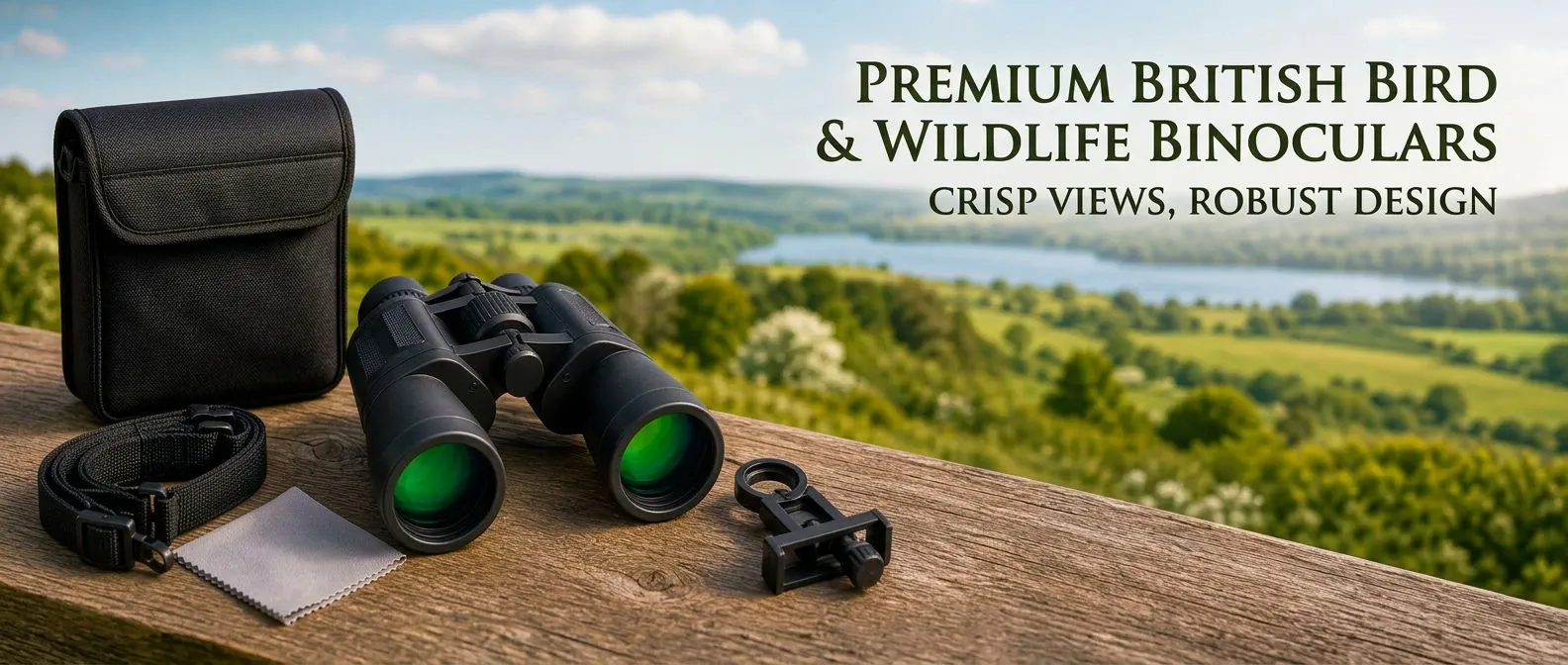
In short: good binoculars for bird watching match the magnification and lens size to where you watch, not just the biggest numbers on the box. For a first do-everything pair in woodland and gardens, 8x42 is the classic UK all-rounder. Step up to a wide-angle 12x50 like the Militnipon 12x50 Wide-Angle Binoculars (£43.45) when most of your birding is at distance or in grey light and you are happy to steady the view.
If you are choosing your first pair and the jumble of numbers — 8x42, 10x42, 12x50 — means little yet, you are in good company. Most new birders in Britain are not deciding between showroom-perfect optics; they are trying to see a distant wader on an estuary, or follow a tit as it flicks through a hedge on a flat, cloudy morning. This guide explains what actually matters, so you can buy once and enjoy it, without paying for features you do not need.
How to read binoculars for bird watching
Every pair is described by two numbers, such as 8x42 or 12x50. The first is magnification (how many times closer the image looks), and the second is the objective lens diameter in millimetres (the big front lenses that gather light).
- Magnification (8x, 10x, 12x): more reach shows distant birds larger, but it also narrows your view and magnifies every hand tremor. 8x is calm and easy to hold; 12x reaches further but wants a steadier hand or a rest.
- Objective size (42mm, 50mm): bigger lenses gather more light, which genuinely helps on overcast days and at dawn or dusk. A 50mm lens on a 12x pair gives an exit pupil of about 4.1mm — comfortably bright for daytime use. The cost is weight and bulk.
- Field of view: a wide field helps you find a bird and keep it in sight as it moves — invaluable for a beginner still learning to get on target quickly. This is where wide-angle optics earn their keep.
- Comfort: eye relief, eyecups and, in particular, large 22mm eyepieces make a real difference over a long session, especially if you wear spectacles.
- Weatherproofing: British birding means drizzle and changeable light, so a sealed, rubber-armoured body is worth having.
8x42, 10x42 or 12x50: which should a first-time birder pick?
Here is the honest, widely held view among UK birders — worth knowing before you spend, even a modest sum.
| Spec | Best for | Watch-outs |
|---|---|---|
| 8x42 | Woodland, gardens, reserves; a steady, wide, forgiving all-rounder for a first pair. | Less reach across open water or moorland. |
| 10x42 | Open country and coast where birds sit further off. | Slightly narrower view; a touch more shake. |
| 12x50 | Long-distance watching over estuaries, reservoirs and hills, and poorer light thanks to the 50mm lenses. | Heavier (around 820g); 12x is above the comfortable all-day handheld limit, so brace it or use a tripod. |
So if you picture yourself mostly in a wood or your garden, an 8x42 is the safest first buy. If you already know you will spend more time scanning a distant shoreline, a reservoir, or a hillside — and you do not mind bracing your elbows on a rail — a 12x50 rewards you with reach and brightness that lower powers cannot match. It is a common worry that "12x will be too shaky" and that "a full-size 50mm body is too heavy to hold": both are fair, and both are answered by leaning on a fence, a tree or a tripod rather than free-handing every view. We cover that in detail in our guide to how to hold binoculars steady.
Where the Militnipon 12x50 fits — and where it does not
Plenty of first-time buyers do not want to spend two or three hundred pounds on a hobby they have not yet proven they will stick with. The Militnipon 12x50 Wide-Angle Binoculars are built for exactly that buyer: a wide-angle field to help you find and follow birds, 50mm lenses for grey-day brightness, 22mm eyepieces for comfortable long looks, and a rugged, splash-resistant body — at £43.45 with free UK delivery, a 2-year UK warranty and 30-day returns.
Honest boundary: this is not the lightest, do-everything woodland pair, and it will not turn a jittery handheld view at 12x into a rock-steady one on its own. It is at its best when you are watching at range, from a reasonably settled position, and can rest it on something for the longest, sharpest views. If pocket-size portability for all-day walking is your top priority, a compact 8x is the more comfortable companion. For a full look at the value case at this price, see binoculars under £50; if the coast is your patch, read binoculars for coastal walks.
Frequently asked questions
Are 12x50 binoculars good for bird watching?
They can be, but not as an all-day woodland pair. A 12x50 shines when you mostly watch at distance over estuaries, reservoirs and open country, and in the poorer light typical of a grey UK day, because the 50mm lenses gather plenty of light. The trade-offs are weight (around 820g) and hand shake at 12x, so brace on a rail or use a tripod for the steadiest view.
Is 8x42 or 12x50 better for a beginner?
For a first, do-everything pair in woodland and gardens, 8x42 is the classic UK all-rounder: a wider field of view, a steadier image and easy comfort for long sessions. Choose a 12x50 instead when your birding is mostly at long range or in low light and you are happy to steady it. Many birders end up owning both for different days.
What magnification is best for garden birds?
Close, fast-moving garden and woodland birds are easiest with 8x, because the wider view helps you find and follow them. Higher magnification narrows the view and magnifies every wobble, which makes quick birds harder to keep in frame at arm's length.
Do I need a tripod for 12x50 binoculars?
Not always, but it helps. At 12x every tremor is magnified, so for long, comfortable viewing many people steady the binoculars against a wall, fence or tree, or fit an inexpensive L-adapter to the standard quarter-inch tripod thread. For quick scans, a braced standing posture is usually enough.
Ready to see the difference with Militnipon?
Explore the Range — £43.45