Binoculars for Coastal Walks: Seals, Seabirds and Boats from the Shore
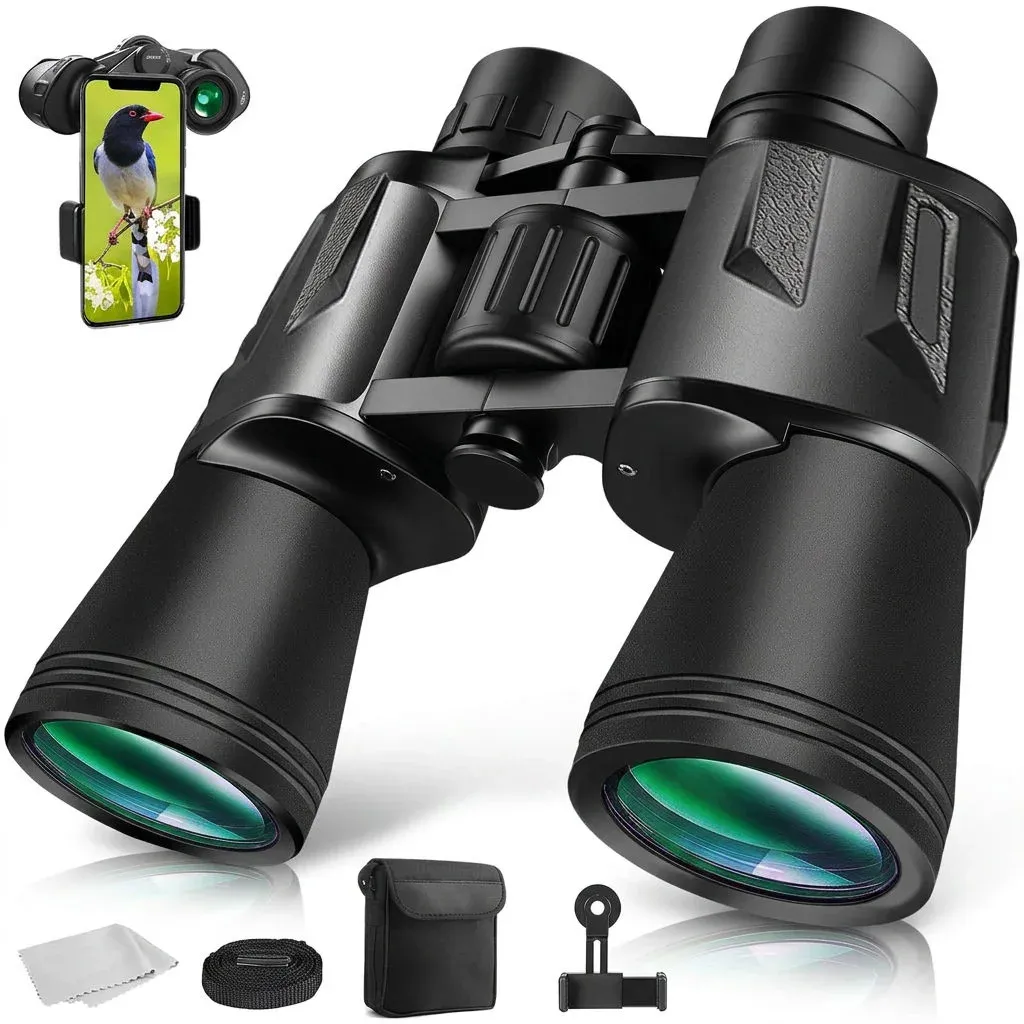
In short: for coastal walks you want enough reach to resolve a hauled-out seal or a boat well offshore, a wide field to hold a moving target, and a body that laughs off spray and drizzle. A wide-angle 12x50 like the Militnipon 12x50 Wide-Angle Binoculars (£43.45) does all three — with one honest caveat: its IPX5 rating means splash-resistant, not submersible.
Anyone who has stood on a Cornish headland or a Norfolk shingle bank knows the problem: there is clearly something out there — a grey seal on a sandbar, a distant gannet, a boat you would like to name — but a phone camera turns it to mush the moment you zoom. This is exactly the job a full-size 12x50 is built for.
Why a wide-angle 12x50 suits the shore
- Reach across water: distances at the coast are deceptive. 12x magnification pulls in seals, seabirds and boats that 8x leaves as specks, which is why open, watery habitats reward the extra power.
- Brightness in sea haze: the 50mm lenses give a roughly 4.1mm exit pupil, holding a usable, bright image through the flat, grey light and salt haze that are standard on the British coast.
- A wide field to track movement: a boat under way or a shearwater skimming the swell is easy to lose in a narrow view. The wide-angle field makes it far easier to pick a moving target up and stay with it — a common frustration with cheaper, tunnel-view optics.
- Comfort for a long scan: the 22mm eyepieces make sustained watching over a bay less tiring, spectacles or not.
What IPX5 really means on a wet, salty coast
This matters, so here it is plainly. The Militnipon body is IPX5, an international rating (IEC 60529) for resistance to water jets from any direction. In practice that covers rain, sea spray and the odd wave-thrown splash on a blustery walk. It does not mean the binoculars are submersible: dropping them in a rock pool or the sea is a job for an IPX7/IPX8-rated instrument, not this one. Salt water is also not covered by the IP rating at all, so after a spray-soaked session, wipe the housing, rinse any salt off gently with a barely damp cloth and let them dry before they go back in the bag. Sensibly used, IPX5 and the rubber armour are plenty for coast-path birding; treated as a dive mask, they are not.
Getting a steady view in coastal wind
Wind and 12x magnification do not naturally get along — gusts turn a free-handed view into a shimmer. The fix costs nothing: brace against a railing, a wall, a fence post or your own raised knee, or fit an inexpensive adapter to the standard quarter-inch tripod thread for the steadiest long watches. The body is full-size at around 820g, so it earns its place best on a dedicated coastal outing rather than as a pocketable everyday carry; a short guide to the technique is in how to hold binoculars steady. All this comes at £43.45 with free UK delivery, a 2-year UK warranty and 30-day returns, so a trip-driven purchase is low risk.
New to choosing specs, or weighing the price? See binoculars for bird watching for the basics and binoculars under £50 for the value case.
Common questions
Are these binoculars waterproof for the beach?
They are splash-resistant to IPX5, which handles rain and sea spray well, but they are not submersible. Keep them out of the water itself, and rinse and dry the housing after salty, spray-heavy sessions.
Can I really see seals from the shore with them?
Yes — 12x magnification is well suited to picking out seals hauled out on sandbars and rocks, and boats offshore. On a windy clifftop, brace the binoculars on something solid for the clearest view.
Ready to see the difference with Militnipon?
Explore the Range — £43.45