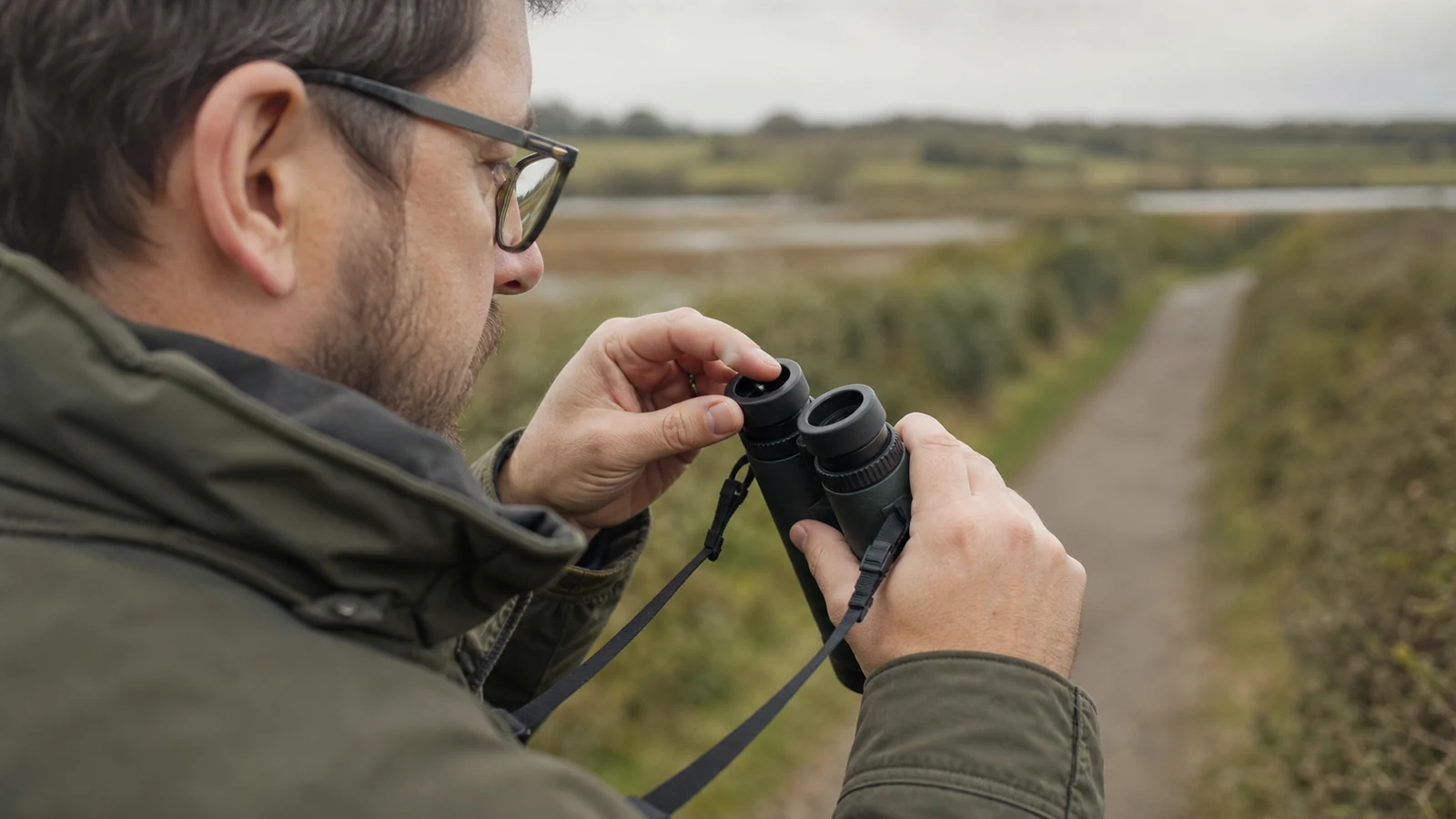
Binoculars For Glasses Wearers Uk
Direct answer: binoculars for glasses wearers UK buyers should have enough eye relief, eyecups that move down or out of the way, and a real glasses-on test that shows the full field without black rings at the edge.
Glasses push your eyes farther from the ocular lenses. That distance can crop the view if the binocular design is not forgiving. RSPB guidance on binocular terms advises glasses wearers to look for substantial eye relief and notes that twist-down eyecups help both spectacle wearers and non-spectacle wearers.
The two-minute glasses-on test
- Put your glasses on exactly as you would outdoors.
- Set eyecups down or retracted, then raise the binoculars naturally.
- Adjust the hinge until the two circles merge into one.
- Look for black crescents around the edge. If they appear, adjust eye position once; if they keep returning, the fit is poor.
- Focus on a detailed object, then scan sideways. The view should stay usable without pressing hard into your frames.
UK binocular tech-spec advice gives roughly 15-20mm eye relief as a starting clue and recommends a practical field test because face shape and frame design still matter.
Do not buy on the number alone
A published eye-relief figure helps you shortlist, but it is not the same as comfort on your face. Thick frames, deep-set eyes and eyecup shape all change the result. Large eyepieces can feel easier to approach, but they do not replace adequate eye relief.
long-eye-relief birding guidance explains why retractable eyecups matter: they let your glasses sit closer to the usable viewing position.
When compact models fail
Compact travel binoculars can be excellent for pockets, but some feel fiddly for glasses wearers because the exit pupil is smaller and eye placement is less forgiving. Full-size designs may be easier to align, though they add weight. If weight is your bigger problem, choose the lighter pair; if black rings are the problem, prioritise eye relief and eyecup behaviour.
Use this checklist alongside large eyepiece comfort, exit pupil in low light, and bird hide viewing posture.