Exit Pupil Binoculars Low Light Uk
Direct answer: exit pupil is the objective lens size divided by magnification. In low light, a larger exit pupil can feel more forgiving, but it does not guarantee a brighter or better birdwatching view because coatings, glass quality, field of view and hand shake still matter.
The basic formula is simple. A 8x42 binocular has an exit pupil of about 5.25mm. A 10x42 has about 4.2mm. A 12x50 also has about 4.2mm. RSPB binocular terminology guidance defines exit pupil this way and connects higher values with possible low-light usefulness while still encouraging real-world testing.
Worked examples
| Format | Maths | What it suggests |
|---|---|---|
| 8x42 | 42 divided by 8 = 5.25mm | More forgiving in dull light and easier handheld for many users. |
| 10x42 | 42 divided by 10 = 4.2mm | More reach, less forgiving eye placement than 8x42. |
| 12x50 | 50 divided by 12 = 4.2mm | Extra reach with a similar exit pupil to 10x42, but steadiness becomes more important. |
Bird Spot's explanation of binocular numbers uses the same kind of maths and notes why larger pupils can help around dawn, dusk and shade.
Why the number is not enough
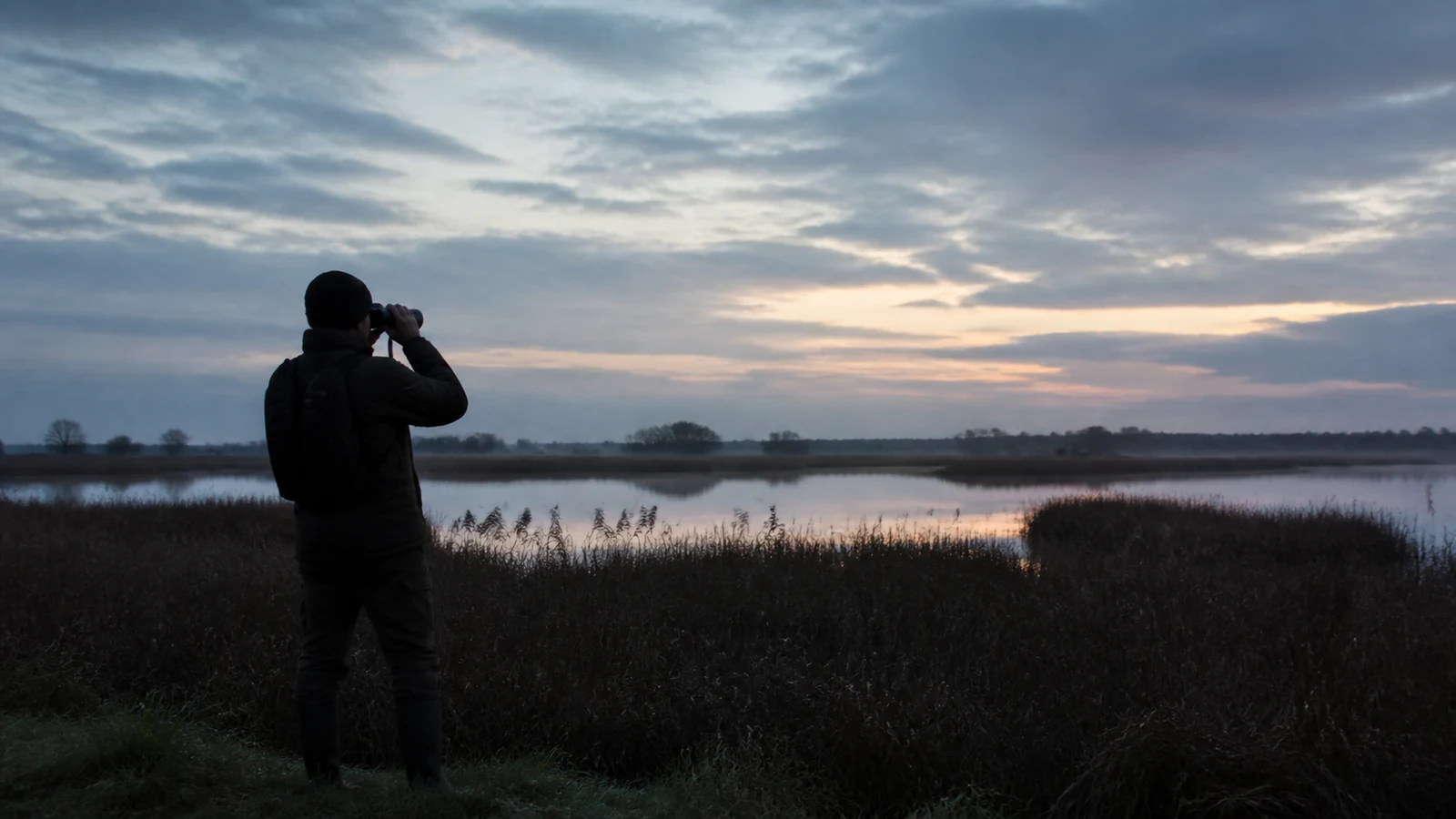
UK low light is rarely just darkness. It is grey cloud, winter afternoon, woodland shade, sea glare and wind. Exit pupil says something about geometry, not the whole optical system. A shaky high-power view can reveal less detail than a calmer lower-power view with a similar exit pupil.
UK binocular tech-spec guidance is useful here because it treats exit pupil as a pointer rather than proof: coatings and glass affect perceived brightness too.
When to proceed
Proceed towards larger objectives if you often watch at dawn, dusk, in shaded hides or across open water and you are comfortable carrying the size. Stop chasing the bigger second number if the added weight means the binoculars stay at home, or if higher magnification makes the image too unstable.
For more context, read about long-viewing eyepiece comfort, wetland and estuary conditions, and bird hide support.