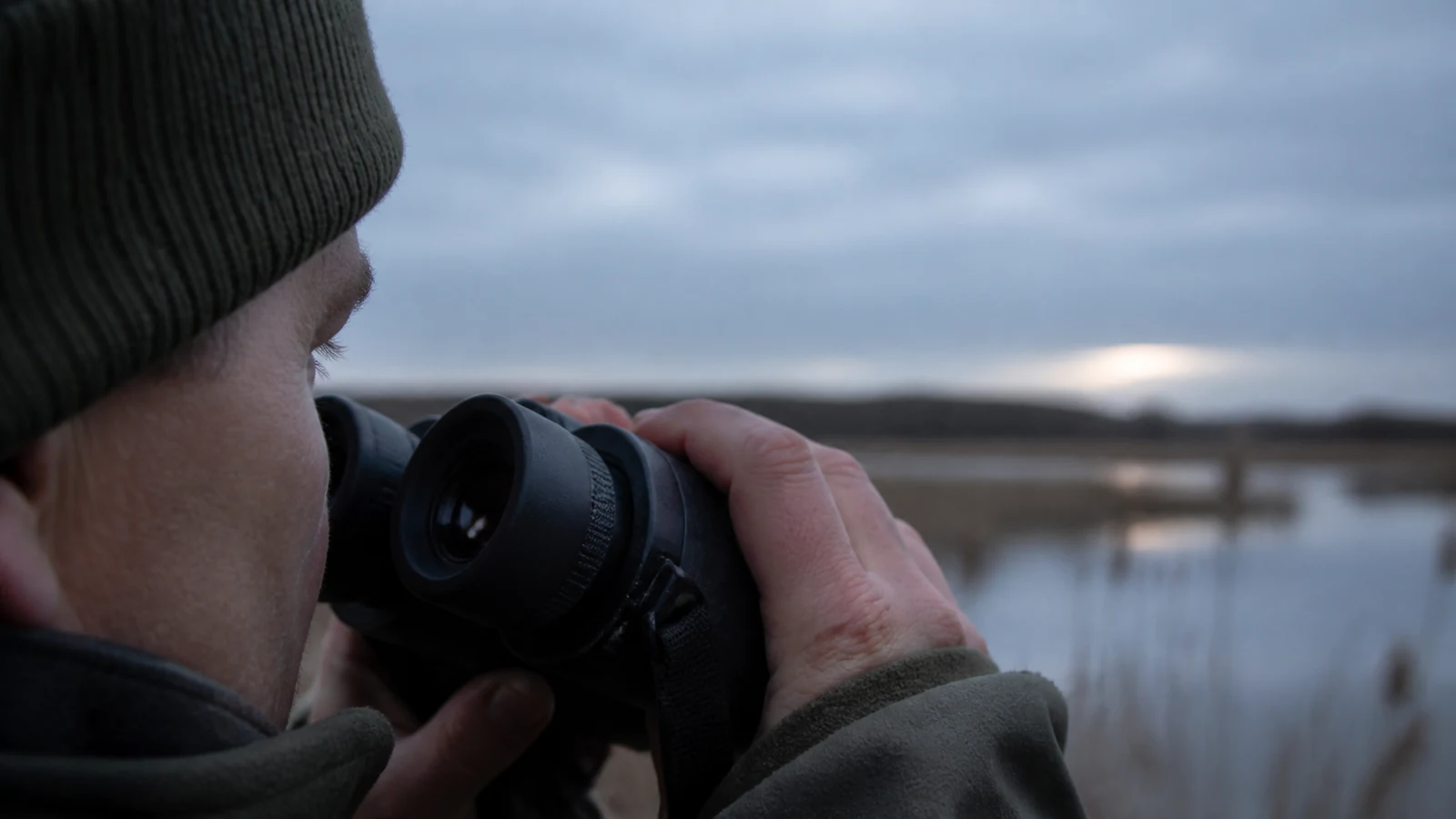
Large Eyepiece Binoculars For Bird Watching Uk
Direct answer: large eyepiece binoculars for bird watching UK sessions can feel easier to line up and more forgiving during long watches, but eyepiece size alone does not prove comfort. You still need enough eye relief, suitable eyecups, sensible magnification and a weight you will actually hold.
Long sessions expose small annoyances. A binocular that seems fine for thirty seconds in a shop can feel like a narrow tunnel after an hour in a hide or beside a wetland. RSPB optics terminology guidance links eyecups and eye relief to whether the viewer can see the full field, especially when glasses are involved.
The comfort ladder
- Full image first: check that both eyes see a clean, round view without black crescents at the edge.
- Eye placement second: move the binoculars away and back again. A forgiving pair finds the view quickly.
- Focus third: turn the centre wheel while staying relaxed. If your face or shoulders tense, the session will feel longer.
- Weight last, but honestly: larger glass can be comfortable at the eyes and still tiring in the wrists.
Eye relief is not the same as a large ocular lens. UK technical binocular guidance explains that eye relief and eyecup fit influence whether the whole field is visible or partly blacked out. A big-looking eyepiece with poor fit can still disappoint.
Separate three questions
Ask three separate questions before buying. Is the eyepiece easy to align? Is the exit pupil forgiving enough for dull light? Is the whole binocular stable enough at its magnification? If any answer is weak, the viewing experience may still feel tiring.
For spectacle wearers, the check becomes stricter. long-eye-relief birding guidance explains why retractable eyecups matter when frames keep your eye farther from the ocular lens.
Who should choose lighter glass instead
Choose a lighter 8x42-style binocular if you walk all day, shake noticeably at higher power, or want one pair for gardens, woods and travel. Choose a larger full-size design when you mostly sit or stand at fixed viewpoints and value a more relaxed eye position over pocket carry.
If a full-size binocular remains appropriate after those checks, the 12x50 wide-angle binoculars are worth comparing as a conditional option for fixed-point birdwatching. Do not treat large eyepieces as a medical cure for eye strain; treat them as one comfort factor among fit, support and viewing time.
Next, use the glasses-wearer eye relief checklist, the exit pupil guide, and the bird hide comfort guide.