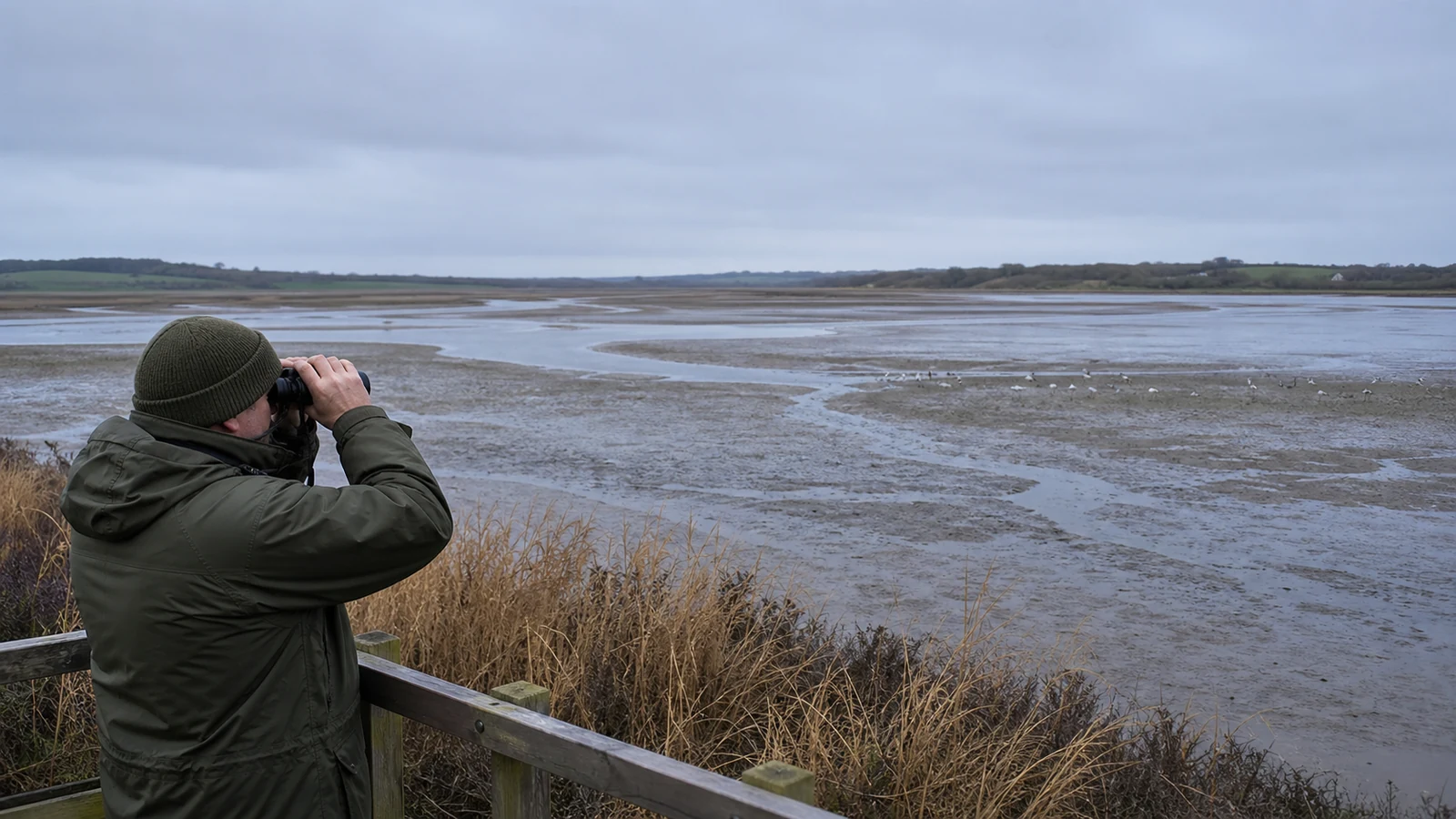
Wetland Estuary Binoculars Uk
Direct answer: wetland estuary binoculars UK buyers should balance reach, field of view, glare control and steadiness. Open water often tempts higher magnification, but wind, shimmer and hand shake can erase the extra detail unless you can brace the view.
Wetlands are different from gardens. Birds may be spread across mudflats, reed edges, scrapes and tidal channels. habitat-based UK birding advice notes that wetlands often place waders far out and turns the decision into a stability-versus-reach trade-off, with glare over water also mattering.
Format choices
| Format | Where it helps | Main caution |
|---|---|---|
| 8x42 | Steady scanning, mixed reserve walks, long handheld use. | May lack detail across broad water. |
| 10x42 | More reach for reservoirs, estuaries and open country. | Less forgiving than 8x for shake and eye placement. |
| Higher-power full-size | Distant birds from hides, rails or fixed viewpoints. | Needs a steady brace and honest weight tolerance. |
Clifton Cameras' UK birding guide associates 10x42 preferences with open landscapes such as wetlands, reservoirs, estuaries and coasts.
Your wind-shake plan
Before buying higher power, decide how you will steady it. In a hide, that might be the viewing shelf. On a seawall or raised path, it might be a rail, elbows tucked hard into your body, or a tripod adaptor if the binocular supports one. Without that plan, extra magnification can become extra movement.
RSPB binocular buying guidance cautions that stronger than 8x or 10x is hard to hold steady for wildlife watching and frames 10x as useful for open country and large stretches of water.
Waterproof expectations
British wetlands are damp places, but do not assume every binocular is immersion-proof. Look for the stated weather rating, understand its limit, and carry a simple rain cover or dry bag if you will be out in prolonged rain. Also think about glare: a comfortable eye position and sensible hooding with your hands can matter as much as raw power.
When to proceed
Proceed towards higher power if you mostly watch from hides, banks and viewpoints, and the recurring problem is distant birds rather than finding birds quickly. Stay with steadier 8x or 10x formats if you walk far, share the binoculars often, or usually track birds in flight.
If you can brace a full-size view and want a same-site comparison point, the 12x50 wide-angle binoculars are relevant under those conditions. Compare them with the spotting scope decision, bird hide setup, and exit pupil maths.