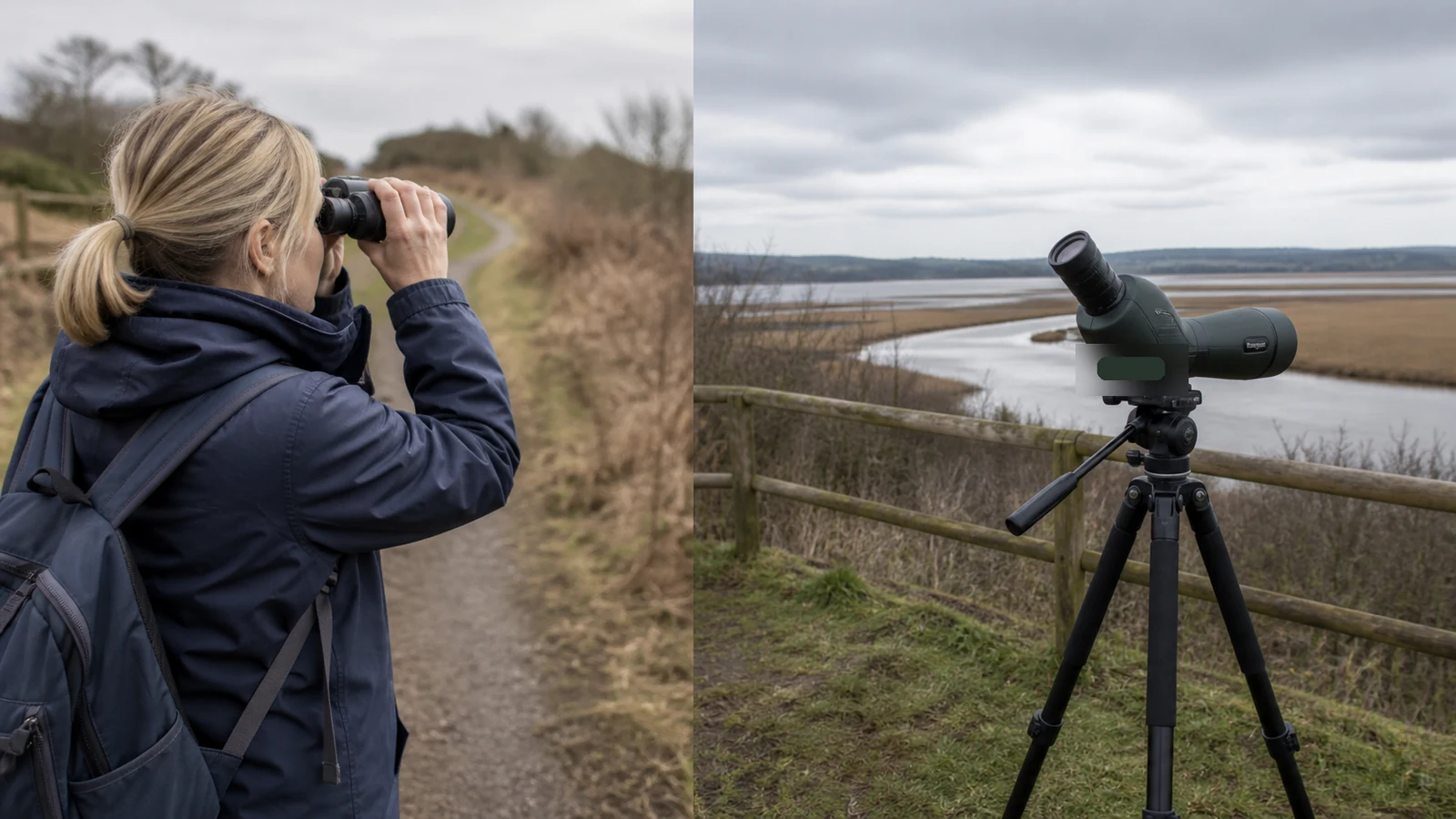
Binoculars Vs Spotting Scope Uk
Direct answer: buy binoculars first for UK reserves unless distance is repeatedly stopping you from identifying birds from a fixed viewpoint. A spotting scope helps with distant waders, reservoirs and estuaries, but it is slower, bulkier and normally needs a tripod.
Bird Spot's binoculars-versus-scopes guide makes the core distinction: binoculars are handheld and versatile, while scopes are for long-distance stationary watching.
Decision table
| Situation | Binoculars | Spotting scope |
|---|---|---|
| Woodland, garden, park paths | Best first choice: quick, wide, mobile. | Usually too slow and narrow. |
| Bird hide over a scrape | Still essential for scanning and finding birds. | Helpful if birds are often distant and you have space. |
| Estuary or reservoir | Good for locating flocks and movement. | Useful for detail on far waders and waterbirds. |
| Beginner budget | Better first spend. | Often a later upgrade once the need is proven. |
UK beginner birdwatching kit guidance also recommends prioritising binoculars, with scopes as a later option for coasts and large reservoirs.
When binoculars win
Binoculars win whenever birds move quickly, the habitat changes every few steps, or you need to raise the optics instantly. They suit gardens, woodland edges, reserve paths and general wildlife watching. They also teach you what your actual distance problem is before you spend on a scope.
When a scope helps
A scope helps when you repeatedly stand in one place and the birds remain too far away for confident detail. This is common with estuary waders, distant ducks and open reservoirs. UK birding retailer guidance on scopes explains that scopes expand detail at distances where binoculars struggle, but they do not replace binoculars.
Do not buy a scope first if
Do not buy a scope first if your main outings are short walks, garden birding, woodland trails or uncertain beginner visits. Log three outings instead: write down whether the limit was distance, shake, dim light, or finding the bird quickly. If distance is the recurring blocker from a fixed place, a scope becomes a serious next step.
For related decisions, see wetland and estuary binocular choices, bird hide binocular support, and exit pupil in low light.